How to Get Rid of Moles in Your Yard: 9 Methods Ranked by Effectiveness
An honest breakdown of what works, what doesn't, and why professional trapping is the only proven solution for mole removal.
Quick Answer
Professional mechanical trapping is the only method with proven results (95%+ success rate). DIY methods fail because they address symptoms, not the problem. Moles need to eat nearly their body weight daily, so poisons are ineffective, sound/vibration doesn't deter them, and repellents wash away. If moles are in your yard, you need traps placed by someone who understands mole behavior.
Method Comparison Table
| Method | Success Rate | Cost | Effort | Best For |
|---|---|---|---|---|
| 1. Professional Trapping | 95%+ | $$$ | None | Active mole infestation (BEST OPTION) |
| 2. DIY Mechanical Traps | 40-60% | $ | High | Early detection, small areas |
| 3. Poison Pellets | 5-15% | $ | Low | Ineffective, moles rarely eat them |
| 4. Sound/Vibration Devices | 0-5% | $$ | None | Not recommended, does not work |
| 5. Repellents (Castor Oil, etc.) | 0-10% | $ | Low | Not recommended, washes away |
| 6. Mole Poppers | 20-30% | $$ | Medium | Unreliable timing, some success |
| 7. Flooding Burrows | 15-25% | Free | High | Temporary displacement only |
| 8. Exclusion (Barriers) | 0% | $$$ | Very High | Prevention only, not removal |
| 9. Gopher Plants (Euphorbia) | 0-5% | $ | Low | Myth, no scientific evidence |
The Problem: What Moles Actually Do to Your Yard
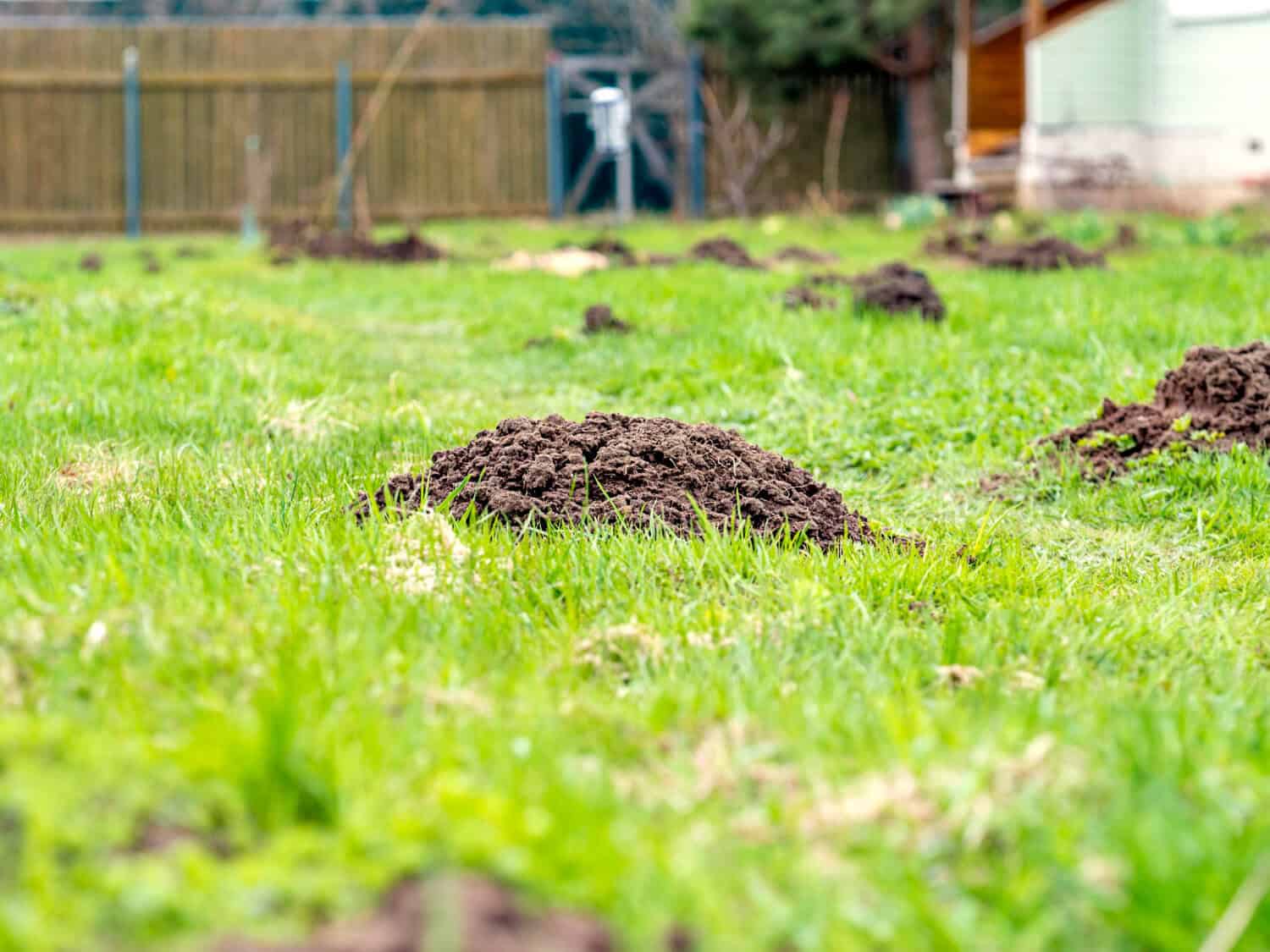
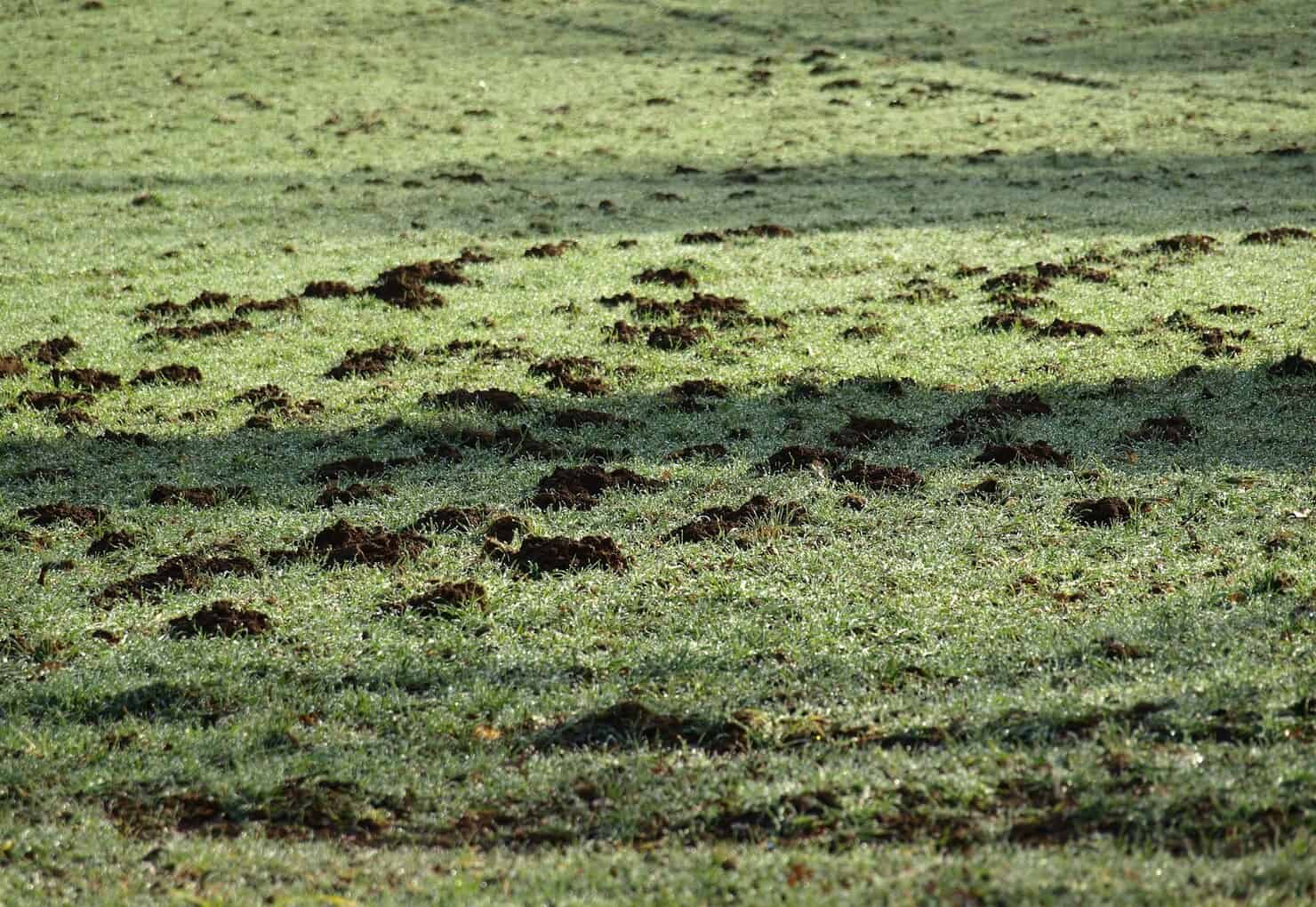
Moles create extensive tunnel networks that destroy your lawn structure. They need to eat nearly their body weight in earthworms and grubs every single day, so they're constantly tunneling and burrowing. This creates raised ridges across lawns, collapsing root systems, and making yards look like a minefield.
The damage you see on the surface is just a fraction of the underground problem. A single mole can tunnel over 100 feet per day, creating networks that compromise the structural integrity of your entire yard.
Why Most Methods Fail
Poisons Don't Work
Moles eat earthworms, grubs and insects, not seeds or grain. Poison pellets sit in tunnels uneaten. Even if a mole ingests poison, you're only treating one mole, and new ones migrate in immediately.
Sound/Vibration Doesn't Deter
Moles are nearly blind but have excellent hearing. Commercial sonic devices don't disrupt their tunneling. They just dig around them. There's no scientific evidence they work.
Repellents Wash Away
Castor oil and ammonia-soaked rags dissipate with rain. They may temporarily upset a mole's nose, but won't force it out. The problem persists underground while you reapply.
First, Make Sure It Is Actually Moles
Half the yards we get called to have something else digging in them. Treating for the wrong animal is the most common reason people spend a season getting nowhere. Here is how to read the damage.
It Is Moles If You See
Cone-shaped mounds of loose soil with no obvious opening, and raised ridges running across the lawn where the ground feels spongy underfoot. Moles push soil up from below. You will almost never see the animal itself.
It Is Voles If You See
Narrow paths worn into the grass at the surface, about two inches wide, often clearest after snow melts. Voles run on top of the ground and eat plants and roots. Clean holes with no mound beside them are theirs too. Full comparison in our moles versus voles guide.
Why You Have Them
Moles follow food, and their food is earthworms. A healthy, moist, well-kept lawn holds more earthworms than a neglected one, which is why the tidiest yard on the street is often the one getting tunnelled. It is not a sign you did something wrong.
Natural and Home Remedies, Honestly
People ask us about these constantly, so here is a straight answer on each one rather than a list of things to buy.
The Grub Myth
The most persistent one. Kill the grubs and the moles will leave, the thinking goes. Earthworms are the bulk of a mole's diet, not grubs, and grub treatment does nothing to earthworms. You can clear every grub in the lawn and the moles will carry on tunnelling, because the food they actually came for is still there.
Castor Oil, Gum and Mothballs
Castor oil granules are the only one of these with any research behind them, and the effect is to make an area less pleasant, not to remove the animal. Rain dilutes it. Chewing gum and mothballs do nothing at all. A mole will not eat gum, and a tunnel is not a sealed space that holds fumes.
Flooding and Exhaust
Mole tunnel systems run deeper and further than people expect, and they drain. A hose puts water in one entrance while the mole moves to another branch. Piping exhaust into a tunnel is both ineffective and a genuinely bad idea near a house.
How Fast Can You Actually Get Rid of Them?
Trapping is the only method that removes a mole on a timescale worth calling fast. A correctly set trap in an active tunnel can catch within a day or two. Most properties are clear inside one to two weeks, depending on how many animals are working the yard and how much tunnel system there is to read.
What slows people down is not the trapping, it is the months spent on repellents first. The single biggest time saving is skipping that stage. If you want the detail on how the traps are set and why placement decides everything, that is in our complete guide to trapping moles.
One honest caveat. If your property backs onto a field, a wood or an untreated neighbouring lawn, new moles can move into the vacated tunnels later. That is not a failed treatment, it is a new animal, and it is why properties on that kind of boundary are better on a monitored plan than a one-off visit.
When to Stop and Call Someone
More Than One Run
A single mole can produce a surprising amount of damage. Several separate ridge systems that do not connect usually means more than one animal, and DIY trapping rarely keeps pace with that.
You Have Tried Traps Already
DIY traps sit around 40 to 60 percent for a reason, and it is almost always placement. If you have set traps for two weeks with nothing to show, the tunnel you chose is probably a feeding run the mole visits rarely, not a main travel route.
Damage Is Spreading
Tunnelling under a patio, a walkway or a retaining wall stops being a lawn problem. So does a lawn being lifted faster than it can knit back together. Both are worth a look sooner rather than later.
We cover Greater Cincinnati, Dayton, Springfield and Northern Kentucky. Our mole removal service handles the whole job, you can see everything else we handle, or read the trapping guide first if you would rather try it yourself. We would honestly rather you solved it than bought something that does not work.
Getting Rid of Moles: Straight Answers
The questions we actually get asked, answered without a sales pitch.
The Bottom Line: Professional Trapping Works
Stop wasting time and money on methods that don't work. Professional trapping has a 95%+ success rate because it directly targets the moles causing damage.