Almost every fall we get some version of the same call. The homeowner put down grub killer in the spring because somebody at the store told them moles come for the grubs. The lawn looked fine through July. Then September showed up, the ridges came back across the front yard, and now they want to know whether the product failed or whether they were sold a story.
The honest answer is a little of both. Moles absolutely eat grubs, so that part of the story is true. What gets left out is that grubs are a side dish, the main course is earthworms, and grub season lines up so neatly with the busiest mole digging of the year that people draw the wrong conclusion from it every autumn. This post covers what a mole actually eats, which grubs live in Greater Cincinnati lawns and when they are near the surface, how to tell grub damage from mole damage while you are standing in the yard, and what all of that means for where your money should go.
Key takeaways
- Moles do eat grubs. An eastern mole eats beetle larvae whenever its tunnel runs into them, along with ants, centipedes, and other soft bodied soil insects.
- Earthworms make up most of a mole's diet, not grubs. A lawn with healthy soil is full of worms whether or not it has a grub problem, which is why grub treatments rarely change mole activity.
- Grub season and mole season overlap. In Greater Cincinnati, grubs feed near the surface from late summer into fall and again briefly in spring, the same months moles push the most surface tunnels.
- Grub damage and mole damage look different. Grubs leave dead brown patches where turf peels back like a loose rug. Moles leave raised ridges and soil mounds over grass that is still rooted.
- Treat grubs only if the grass needs it, and treat moles by removing the mole. Trap Your Moles guarantees mole removal across Greater Cincinnati, with a free phone estimate and no sales visit needed at 513-518-5639.
Do Moles Eat Grubs?
Yes. Moles eat grubs, the white C shaped larvae of Japanese beetles, masked chafers, and other lawn beetles, whenever they find them in a tunnel. But grubs are an opportunistic part of the diet. Earthworms are the staple, and a mole will stay in a worm rich lawn long after every grub is gone.
A mole is an eating machine with a narrow menu: things that live in soil and move. It hunts by patrolling tunnels it has already dug and by pushing new feeding runs just under the turf, and anything soft bodied it bumps into gets eaten. A fat grub is exactly that kind of find. When a mole’s run crosses a pocket of grubs, those grubs are in trouble.
What the mole is not doing is hunting grubs on purpose. Moles find food mostly by touch and smell at very close range, so the menu is simply whatever the soil offers where the animal happens to be digging. In one yard that is almost all worms. In the yard next door it might be worms plus a patch of grubs under a sunny slope. The mole does not care which. It needs to eat a large share of its own body weight every day, and it takes what is there.
That appetite is also why one mole makes such a mess. It is not finding much food per foot of tunnel, so it has to cover a lot of ground to stay fed, and every foot of ground it covers is a foot of ridge in your lawn. The question most people type in right after this one is what do moles eat, and our guide to the full diet goes through the rest of the list.
If Moles Eat Grubs, Why Are Earthworms the Real Draw?
Because there are far more of them, and they never leave. A healthy lawn in Ohio Valley soil usually holds many more earthworms than grubs, at every depth a mole works, in every month of the year. Grubs come and go with the beetle life cycle. Worms are the steady food a mole builds its territory around.
Here is the pattern we see over and over. The yards with the worst mole problems are rarely the neglected ones. They are the good lawns. Irrigated, fertilized, shaded in the afternoon, mowed high, with soft dark topsoil and plenty of organic matter. Every one of those things is great for grass and even better for earthworms, and earthworms are what a mole is really following.
Some of the heaviest mole damage we work every year is on properties that already pay for a lawn care program with grub control built in. The grubs in those lawns are gone. The moles are not. That is not a failed product. The product did its job on the insect it was aimed at. It just was never aimed at the thing the mole was eating most of the time.
It helps to know what moles do not eat, too. They do not eat grass, bulbs, or plant roots, even though they get blamed for all three. If you have plants wilting and pulling loose from the soil, read our post on whether moles eat plant roots, because the animal responsible is usually a vole, and the fix is different.
What Grubs Live in Greater Cincinnati Lawns, and When Are They Near the Surface?
Mostly Japanese beetle and masked chafer grubs, plus some May and June beetle grubs. Beetles lay eggs in midsummer, young grubs feed on roots near the surface from late July into October, move deeper as the soil cools, then come back up to feed briefly in April and May before becoming beetles.
The calendar is the part nobody explains, and it is the whole reason this myth survives.
Around here the adult beetles are out and mating in late June and July. You have seen Japanese beetles skeletonizing rose leaves and linden trees. Females lay eggs in turf, and the eggs hatch into tiny grubs by late July. From then through September and into October, those grubs grow fast, feed on grass roots in the top couple inches of soil, and do almost all of the damage a grub population is ever going to do. That is why grub damage shows up as brown patches in late August and September, often right when a lawn is already stressed from heat.
When the soil cools in late fall, grubs move down several inches and go mostly quiet for the winter. In April and May they come back up, feed for a few weeks, then pupate and emerge as beetles in early summer to start the cycle over.
Now lay the mole calendar on top of that. Moles push the most visible surface runs when the topsoil is cool and moist, which in Greater Cincinnati means spring and fall. In a hot, dry August, earthworms retreat downward and moles follow them into deep tunnels, so the lawn goes quiet. When the fall rains come back in September, the worms come back up and so does the digging. Our post on when moles are most active walks through that timing in more detail.
So a homeowner finds grubs in September and sees fresh mole ridges in September, and it is completely reasonable to decide one is causing the other. What they are actually watching is two different animals responding to the same thing: cool, damp topsoil full of food.
How Do You Tell Grub Damage From Mole Damage?
Grub damage is dead brown turf that peels up like a loose rug because the roots underneath have been eaten off. Mole damage is raised ridges and piles of loose soil over grass that is still rooted and often still green. Grubs kill a lawn from below. Moles lift it.
You can sort this out in five minutes with your hands and a flat spade.
Pull on the brown grass. Grab a handful of turf at the edge of a dead patch and tug. If it lifts easily with no roots attached, like picking up a piece of carpet, something has eaten the roots, and grubs are the prime suspect. If the grass holds tight and the brown section is sitting on top of a raised, spongy ridge, the roots were not eaten. They were pushed up into air and dried out, and that is a mole.
Cut a test square. At the edge of the damage, where green meets brown, cut a one foot square on three sides with a spade and fold the sod back like a flap. Look in the top two or three inches of soil and count the white C shaped grubs. A few per square foot is normal in a healthy lawn and not worth worrying about. Visible turf damage usually takes something closer to ten or more. Fold the flap back down and water it, and it will root back in.
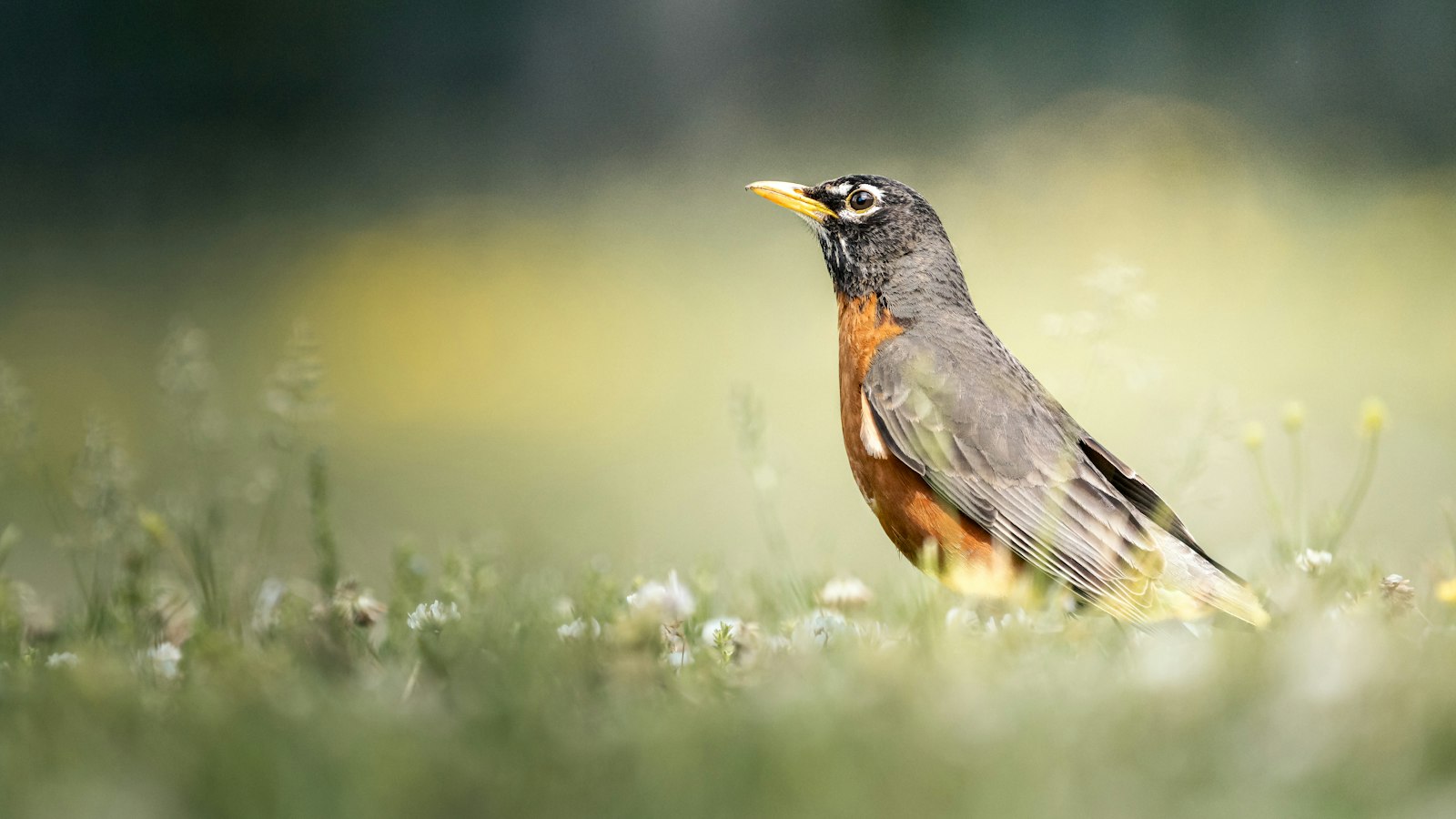
Watch who else is digging. Grubs attract a lot of other animals, and those animals leave a signature a mole never does. Skunks and raccoons dig at night and tear up sod in chunks, sometimes rolling it back in strips. Crows, starlings, and robins work the same patch over and over, pecking into the turf. If you wake up to flipped sod, that is a grub feeder, not a mole. Raccoons are the ones that do it on the biggest scale, and if they are also getting into the house, our write up on raccoons in the attic and under the deck covers that side of the problem.
Look for the mole’s own marks. Moles do not flip sod and do not leave holes open to the air. They leave raised ridges you can feel sink under your shoe, and they leave mounds of loose soil pushed up from deeper tunnels. Flatten a short stretch of ridge with your foot. If it is pushed back up within a day or two, that run is active and there is a mole using it.
It is entirely possible to have both problems in the same yard at the same time. The test square and the flattening test answer two separate questions, and it is worth running both before you spend money on either.
Do Grubs Attract Moles to a Yard?
Grubs can add to what draws a mole in, but they are rarely the reason it stays. Moles settle where soil is moist, easy to dig, and full of earthworms. Remove every grub from that lawn and it is still good mole habitat, which is exactly what homeowners discover the fall after a grub treatment.
Moles do not choose a yard from across town. They move in from whatever is next to you: a wooded lot, a creek bottom, an overgrown fence line, a neighbor’s yard, the common ground behind a subdivision. A young mole leaving its birth tunnels in spring is looking for unclaimed soil it can dig and eat in, and a lawn full of worms qualifies whether or not it has a single grub in it.
Grubs can make a good yard slightly better for a mole, the same way a bonus makes a good job slightly better. Nobody quits a good job because the bonus got cut. We wrote a separate post on why treating grubs will not remove moles that goes deeper on what happens after a treatment, but the short version of the biology is simple. Grub control changes the menu a little. It does not change the address.
Should You Still Treat for Grubs If You Have Moles?
Only if the grubs are a problem for the grass on their own. If a test square turns up enough grubs to kill turf, treating them protects the lawn. It will not protect the lawn from the mole. Decide those two questions separately, because they have different answers and different fixes.
We are trappers, not lawn chemists, and we would rather be straight with you than sell you on one thing by talking you out of another. Grubs are a real turf pest. A heavy infestation can kill large sections of a lawn in a single fall, and preventing that is a legitimate reason to treat. Your lawn care provider can tell you which product fits and when it needs to go down, because timing matters a great deal with grub control and the right window is different for prevention than for a problem you already have.
What we tell people is to stop buying grub control as a mole product. If the test square shows two grubs per square foot and the lawn is covered in fresh ridges, grub control is money spent on the wrong animal. And please skip anything sold as a worm shaped mole bait. Those are poisons, they do not solve the problem any better than grub killer does, and they have no business in a yard with kids, dogs, or the owls and hawks that hunt it.
What Actually Gets Rid of Moles?
Removing the mole. Traps set in runs that are confirmed active, by flattening a section and watching for it to be repushed, take the animal out of the tunnel system for good. Trap Your Moles guarantees mole removal across Greater Cincinnati, Northern Kentucky, and Southeast Indiana, with a free phone estimate.
Once you accept that the mole is not in your yard because of the grubs, the solution gets a lot simpler. You are not trying to make the lawn less appealing, which never really works with a good lawn. You are trying to remove one animal, sometimes two, from a tunnel system you can map.
That is what trapping moles does. A trapper walks the yard, finds the runs that are actually in use, and sets the right trap at the right depth in the corridors the mole has to travel to eat. It does not depend on the mole’s diet, the season’s grub count, or whether the neighbor treats their lawn. It works in a yard full of grubs and in a yard with none.
That is the whole basis of our mole removal service. We are A plus rated with the BBB, we work lawns from Cincinnati out through Northern Kentucky and Southeast Indiana every week of the season, and we put a guarantee on the result because removal is something you can see. Flattened runs stay flat, no new mounds show up, and the lawn stops changing shape.
If you are not sure whether you are looking at grubs, moles, or both, call us and describe what the damage looks like. We will tell you honestly which animal it sounds like, and if it is a grub problem and not a mole problem, we will say so. Call 513-518-5639 for a free phone estimate, no sales visit needed, or reach us here.
Common Questions
Will killing grubs get rid of moles?
No. Moles eat grubs, but earthworms make up most of their diet, and grub treatments do not remove the earthworms. A mole in a lawn with no grubs still has plenty to eat, so it keeps tunneling. Removing the mole itself is the only thing that ends the damage for good.
What is a mole's favorite food?
Earthworms. They make up most of what an eastern mole eats, followed by beetle grubs, ants, centipedes, and other soil insects. Moles find food by touch and smell as they dig, so they eat whatever the soil offers, but worm rich ground is where they settle and stay.
Do moles eat grubs in the fall?
Yes, and fall is when it happens most. Young beetle grubs feed near the surface from late summer through October, and cool, moist fall soil also brings earthworms and moles up into shallow feeding runs. That overlap is why so many people blame fall mole activity on grubs.
Do moles eat grubs in the winter?
Less often. As the soil gets cold, grubs move several inches down and go mostly inactive, and earthworms move deeper too. Moles do not hibernate. They follow their food into deep tunnels and keep feeding all winter, then return to surface runs when the ground thaws in spring.
Why are birds or skunks tearing up my lawn?
That is usually a grub sign, not a mole sign. Skunks, raccoons, crows, and starlings dig or peck at turf to get at grubs feeding under it, often leaving sod flipped back in chunks. Moles never flip sod. They leave raised ridges and mounds of loose soil instead.
Photo by Dmytro Koplyk on Unsplash