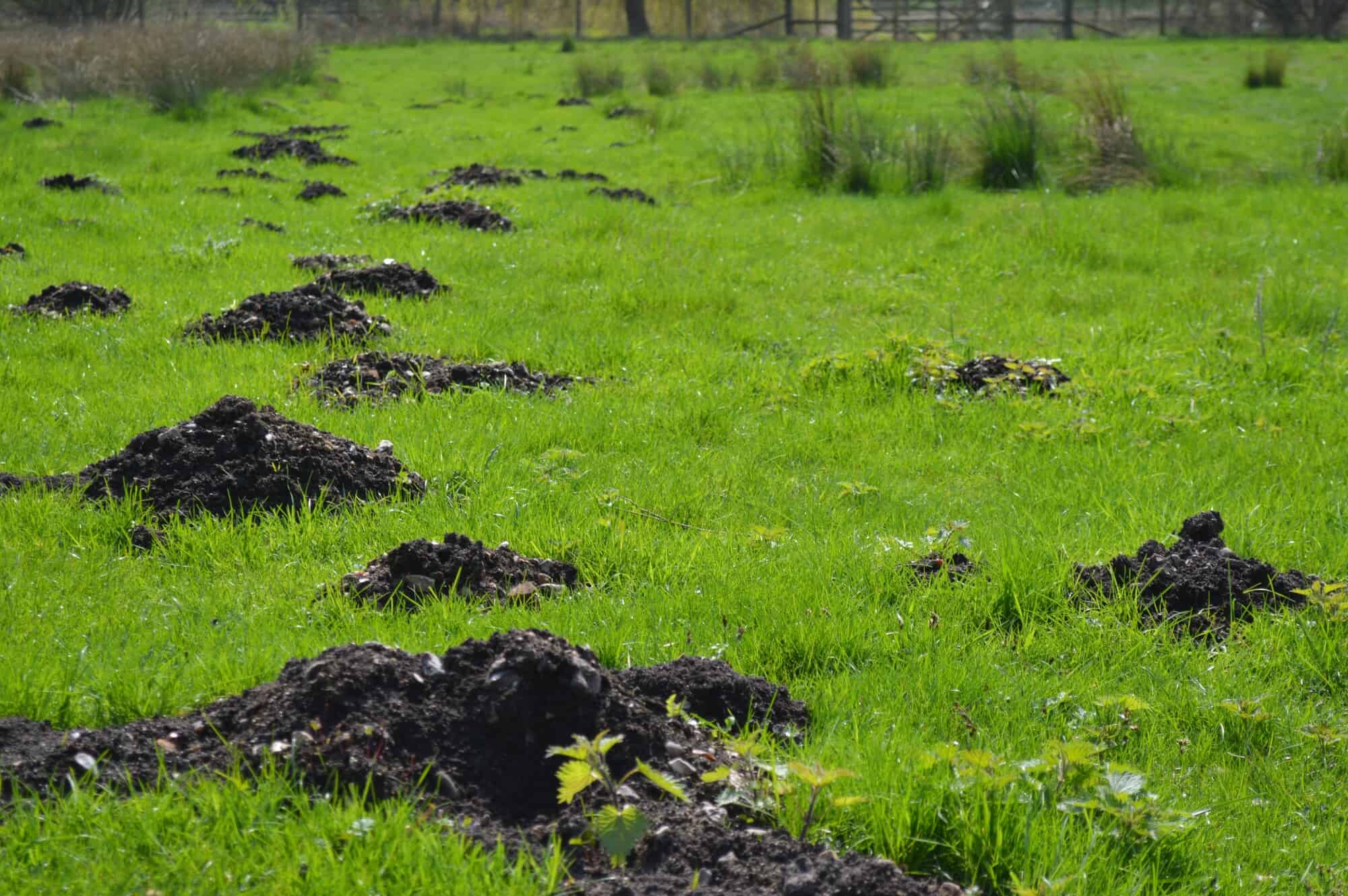
Holes, holes, holes!
Patches of your grass are dying, and there are little mounds of dirt everywhere. Instead of the problem being temporary, the holes only increase, and soon enough your yard looks like a prairie!
It looks like you have a mole infestation.
Moles might seem like cute critters you’d find in a Disney movie, but they’re difficult to remove, and they’ll wreak havoc on your lawn. It’s not as simple as flooding their warrens. These guys have intricate networks, and they can dig fast.
Fortunately, there’s a solution to your mole problem. Read on to find out more.
Are Moles Dangerous?
You might be tempted to think that moles are like mice, rats, gophers, or voles. But that’s not the case. They’re shy creatures that spend almost their whole lives underground and have no interest in people, although one will bite in self defense if you pick it up. That is the short version of whether moles bite and who actually gets bitten.
Moles live most of their life underground. As such, they tend to have poor eyesight. However, they make up for this by having an incredibly sensitive nose that allows them to navigate their subterranean home with ease.
You may be worried that moles are responsible for eating your plants. But moles are insectivores (meaning they only eat insects) which is why they spend most of their time underground. Their diet consists of grubs, worms, and anything else they can find in the dark, moist soil.
Why Are There Moles in Your Yard?
Moles may be attracted to a number of features that your yard provides. As a result, they may remain in your yard for many mole generations.
They seek out cool soil that is filled with insects. They have a tendency to follow human-made borders: hedgerows, fences, and walkways. They love the root systems of bushes, shrubs, and trees since these places are filled to the brim with bugs.
Moles will only migrate to another yard if their food supply diminishes. Pesticides may drive moles to leave your property for greener pastures, but this process could take a long time.
What Damage Can Moles Do to Your Yard?
For starters, mole tunnel networks can weaken the ground. You risk twisting an ankle when you accidentally collapse a section of the tunnel. This may cause future problems when having to fill in and replant areas of your lawn or garden.
Moles are also notorious for killing off grass and other plants. While moles do not eat plants (remember, they’re only insectivores!) they often disturb the root systems. These root systems tend to have abundant food sources.
If moles like your yard, they may stay there for a long time. Meaning more tunnels, more dead plants, and more risk of tripping when you accidentally collapse a tunnel.
Another threat moles pose to the integrity of your yard is not the moles themselves, but what comes after. Voles, another species entirely, will use the networks moles have already dug. And voles love to eat your plants and roots!
How Do You Identify a Mole Infestation?
Moles are quite easy to identify since they have three main signs:
- As mentioned earlier, moles cause the grass to die when they burrow past its roots. You may be able to identify lines of dead grass and dying shrubs. This may be a result of the tunnel running directly beneath your landscaping.
- Wherever moles dig an entry or exit hole, they leave a mound known as a molehill. These may be up to 6 inches in height. So while the saying “don’t make a mountain out of a molehill” may be useful advice, molehills can be a sign of serious problems!
- Molehills, unlike the holes of other species, are spaced apart by as much as 6 feet or more. In addition to this, molehills are often piled with dirt clods and clumps of earth, rather than finer dirt. If you find holes that are very close together, you might not have a mole issue.
If you’re not sure whether your yard is showing these signs, there are experts in mole control who can take a look.
How to Get Rid of Moles
There are plenty of home remedies circling the internet, but your best bet is to hire a professional. This will save you time and avoid an infestation that never seems to end. Here is how the common methods compare:
- Cutting off their food with pesticides or grub killers rarely works. Moles come mostly for earthworms, and most of their food is deep in the soil, so the yard stays attractive. More on that in why treating grubs won’t remove moles.
- Poison baits are a gamble. A mole has to find the bait in an active tunnel and eat it over live worms, you rarely get to confirm the kill, and a dog or cat that digs up the bait or eats a poisoned mole can get sick. We explain more in are you using ground mole poison the right way.
- Trapping is the fastest and most effective method of mole removal. Traps are set in the runways the mole uses every day, with no poisons and no chemicals. See how mole trapping works.
Once you’ve eliminated the local mole population, there are methods to ensure they don’t return.
How to Prevent a Future Mole Infestation
You’ve paid a professional and gotten rid of those pesky moles! Here is what helps keep your yard mole-free for the coming years, and what does not:
- Maintain a trimmed, tidy yard. Moles prefer staying in cover. Eliminate tall grass, piles of mulch, and other debris that will encourage moles to move in.
- Do not count on grub treatments. Moles come for earthworms rather than grubs, so killing off the grubs does not make a lawn unattractive to them. Here is why treating grubs won’t remove moles.
- Skip the repellent plants and home remedies. Moles do not abandon good ground over a smell. We cover the popular ones in why DIY mole removal doesn’t work.
- Skip the sonic spikes. A mole gets used to a repeating noise within days. More on that in do sonic mole repellers work.
- Watch for fresh mounds. If new molehills or raised runs show up, call (513) 518-5639 for a free estimate by phone and have the yard trapped again.
Final Thoughts
If moles are infesting your beautiful lawn or garden, it’s time to act. Find a professional near you who can give you back your outdoor property.